Modulo
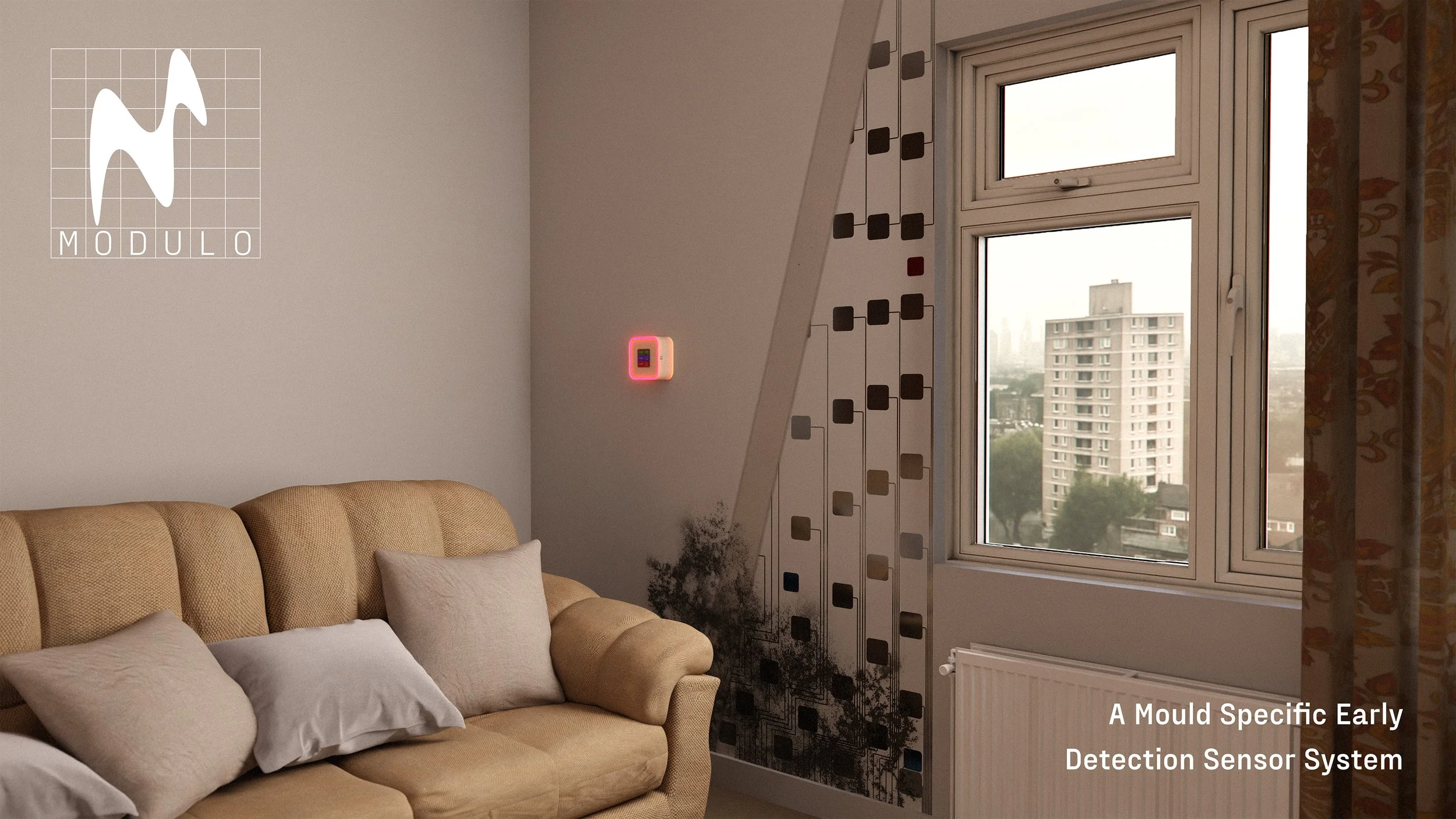
A Mould Specific Early Detection Sensor System
What:
Human Centred Design, Behaviour Change and Material Science
Who:
Imperial College London and Royal College of Art
When:
2024
Context:
Damp and mould are persistent issues in the UK, affecting 6.5 million households. Exposure to mould can cause severe health risks like asthma, allergies, and even death. Mould doesn’t just grow in visible areas—it can thrive behind walls and furniture, posing even greater health risks.
Outcome:
Modulo is a novel sensor system that detects mould growth early, before it can become a health hazard. It tracks and correlates mould growth with temperature and humidity, pinpointing mould in real-time. This enables timely action, helping occupants protect their health and homes.
My Role:
I focused on developing the technology behind the sensor by isolating capacitance changes specifically related to mould growth. I also created multiple 3D animations which explain how our innovation works.
Awards and Press:
iF Design Student Award, Winner, 2025
Exhibited at The Royal Society, London, 2025

Watch the full Modulo story above. This film explains the complex problem the team and I faced, and the steps we took in designing a first of it’s kind mould detection sensor.



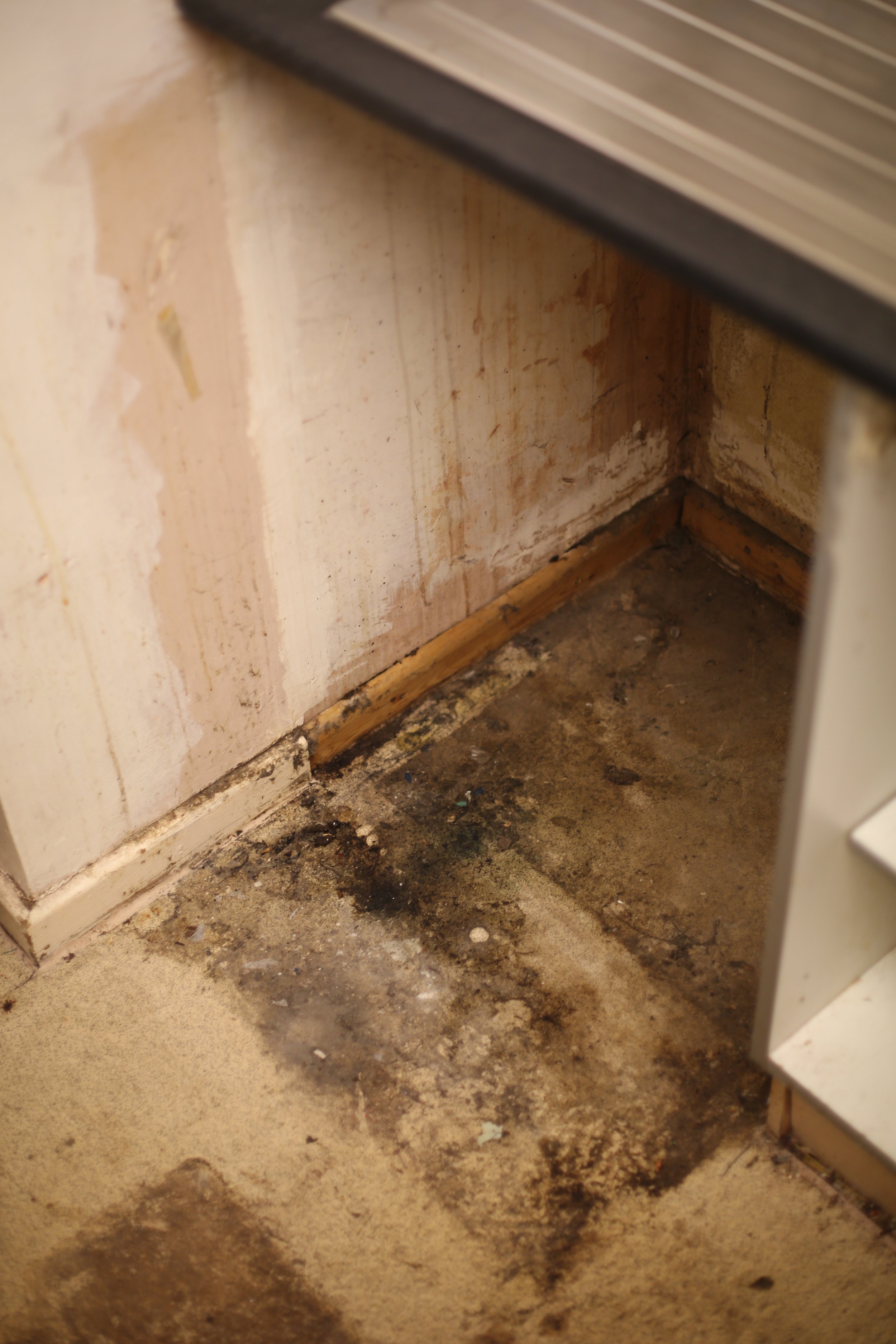
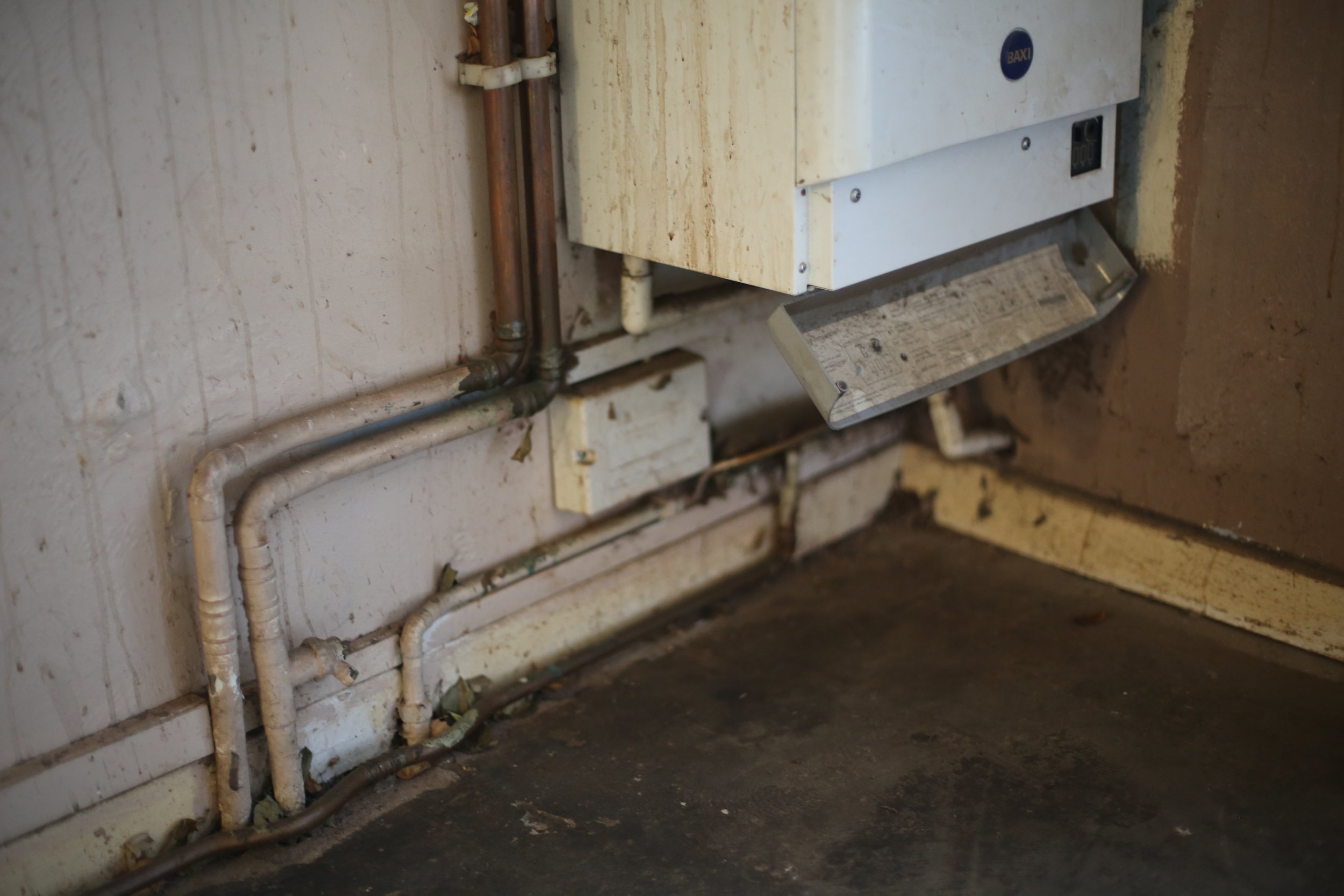
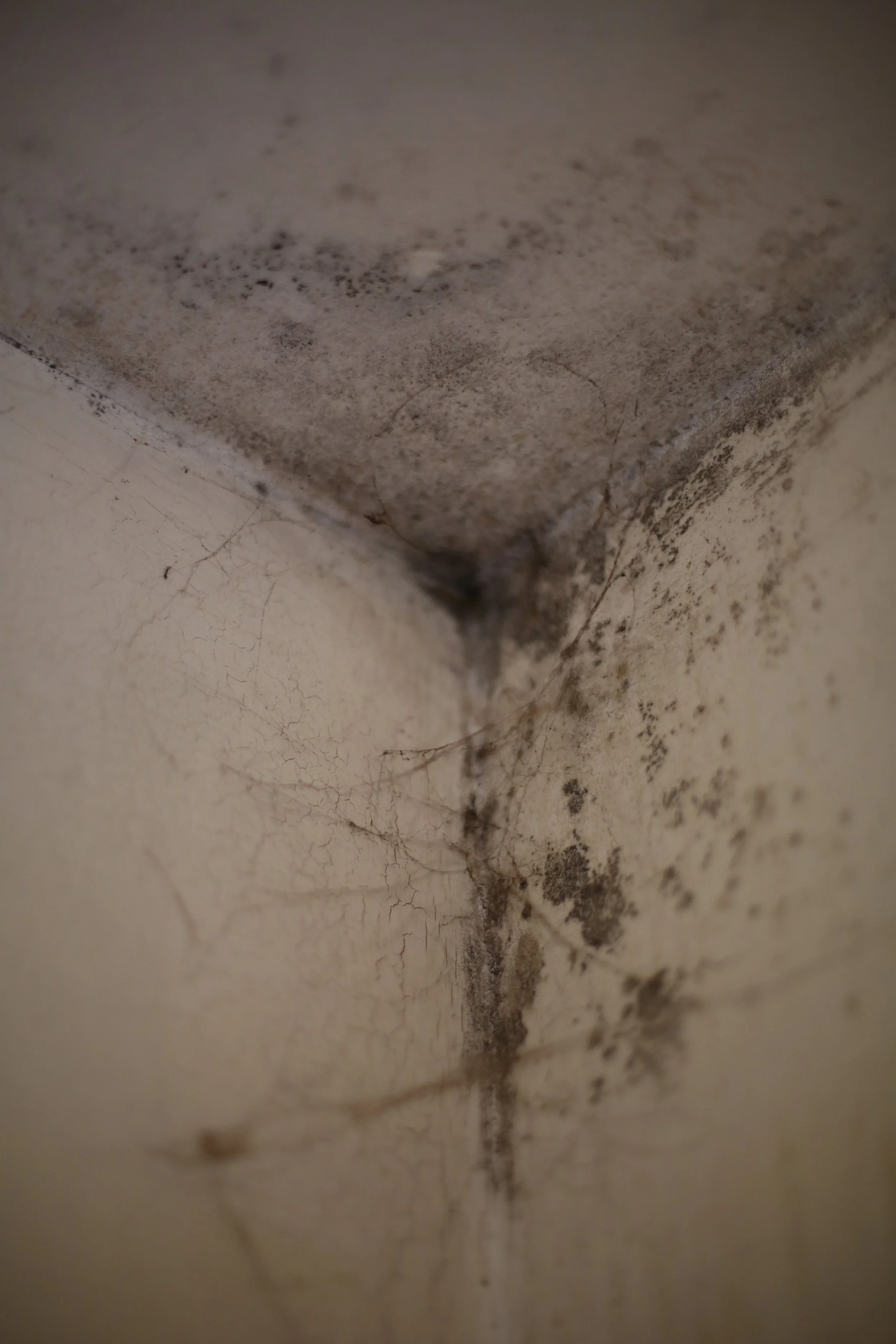
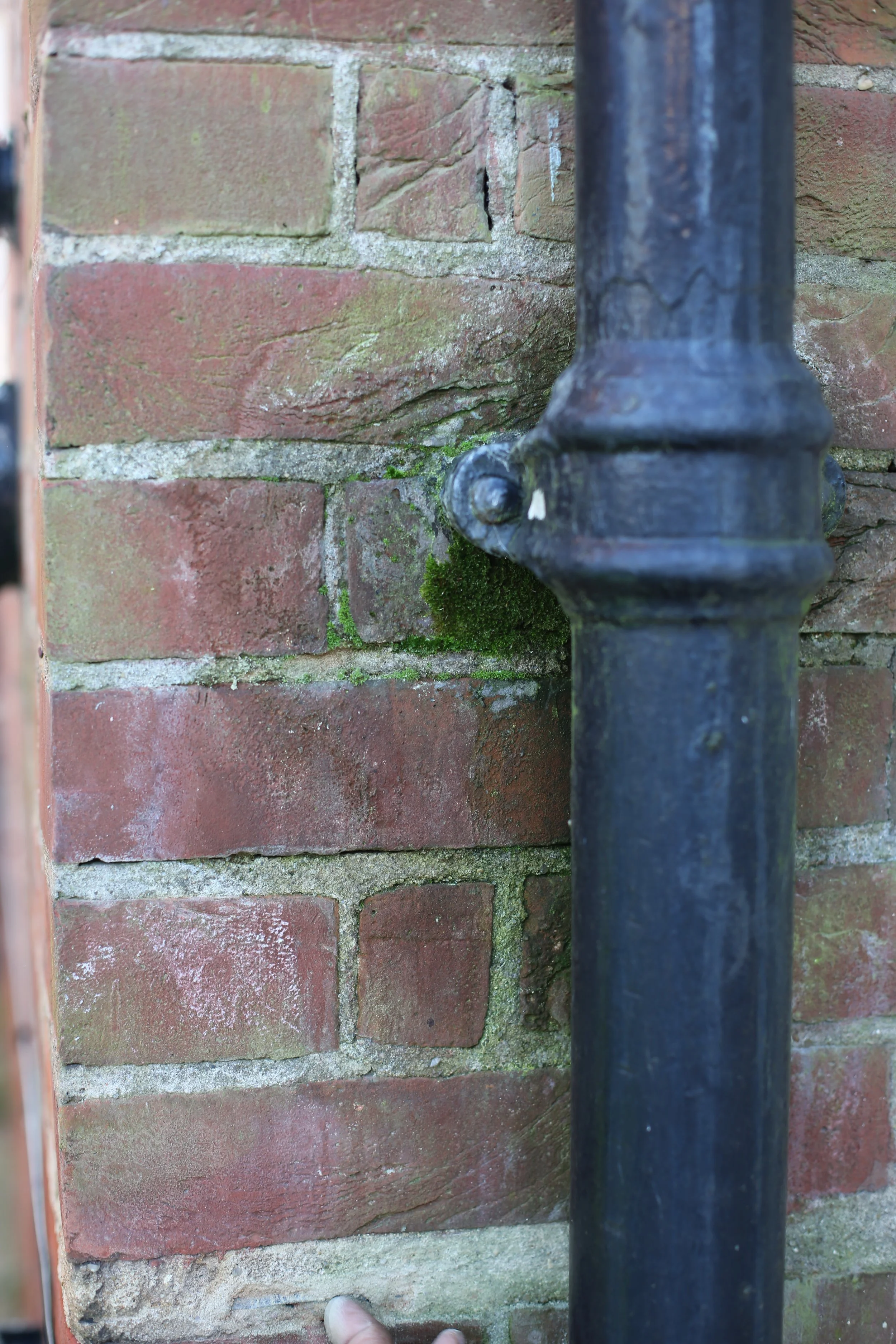

Damp and mould are not new issues, especially in London, which has some of the oldest housing stock in the world. The photographs above were taken during a team visit to a void property in Islington, which was awaiting full renovation due to severe mould and damp conditions.


6.5 million UK households are affected by damp and mould, with a quarter million in the council-owned sector. Mould poses severe health risks and can damage the building fabric. This is especially prevalent in social housing, which can be poorly insulated and ventilated, creating ideal conditions for mould to thrive. Additionally, mould can often be hidden behind furniture or flooring, prolonging the removal process and further exacerbating the health risks.
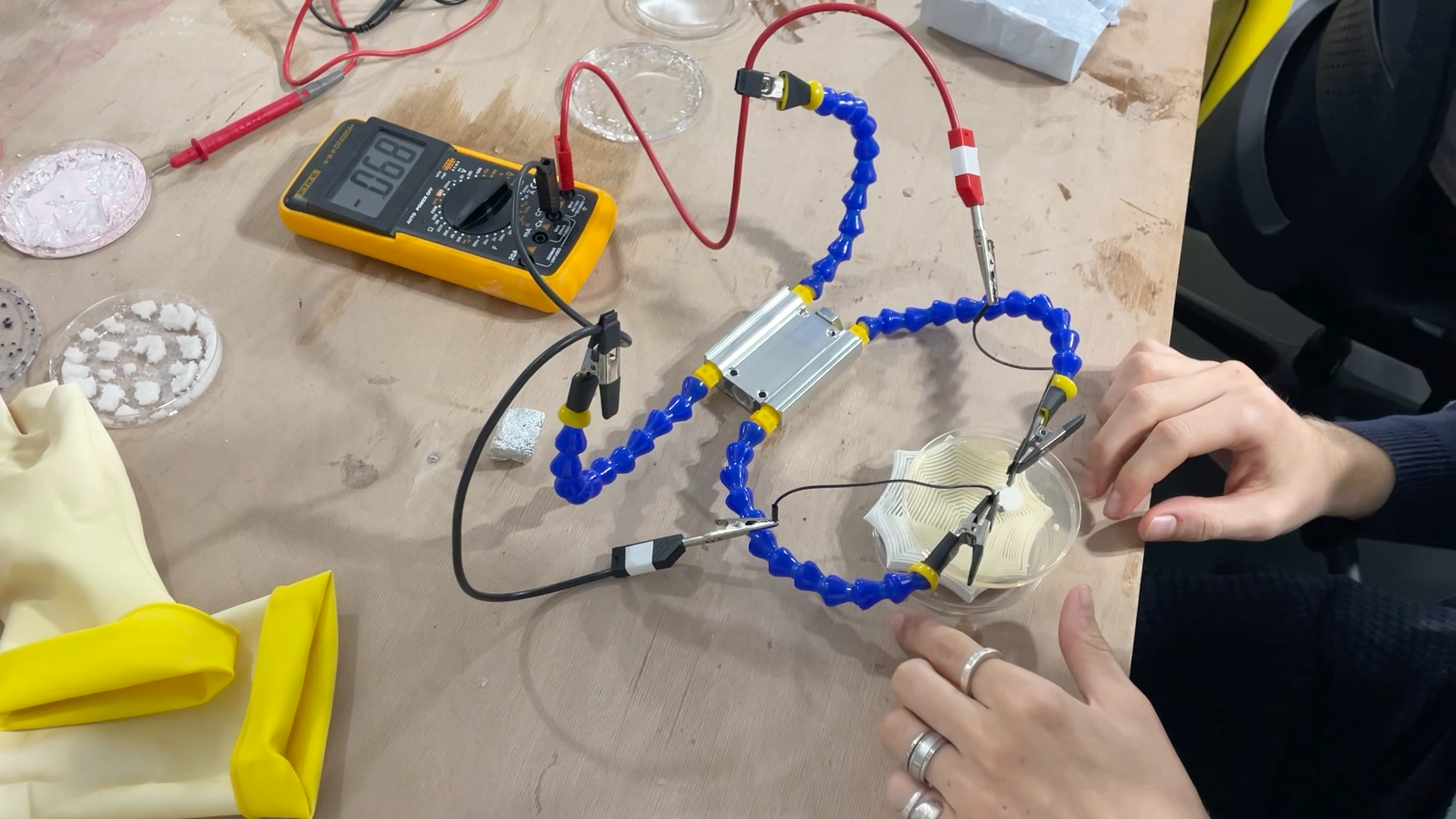
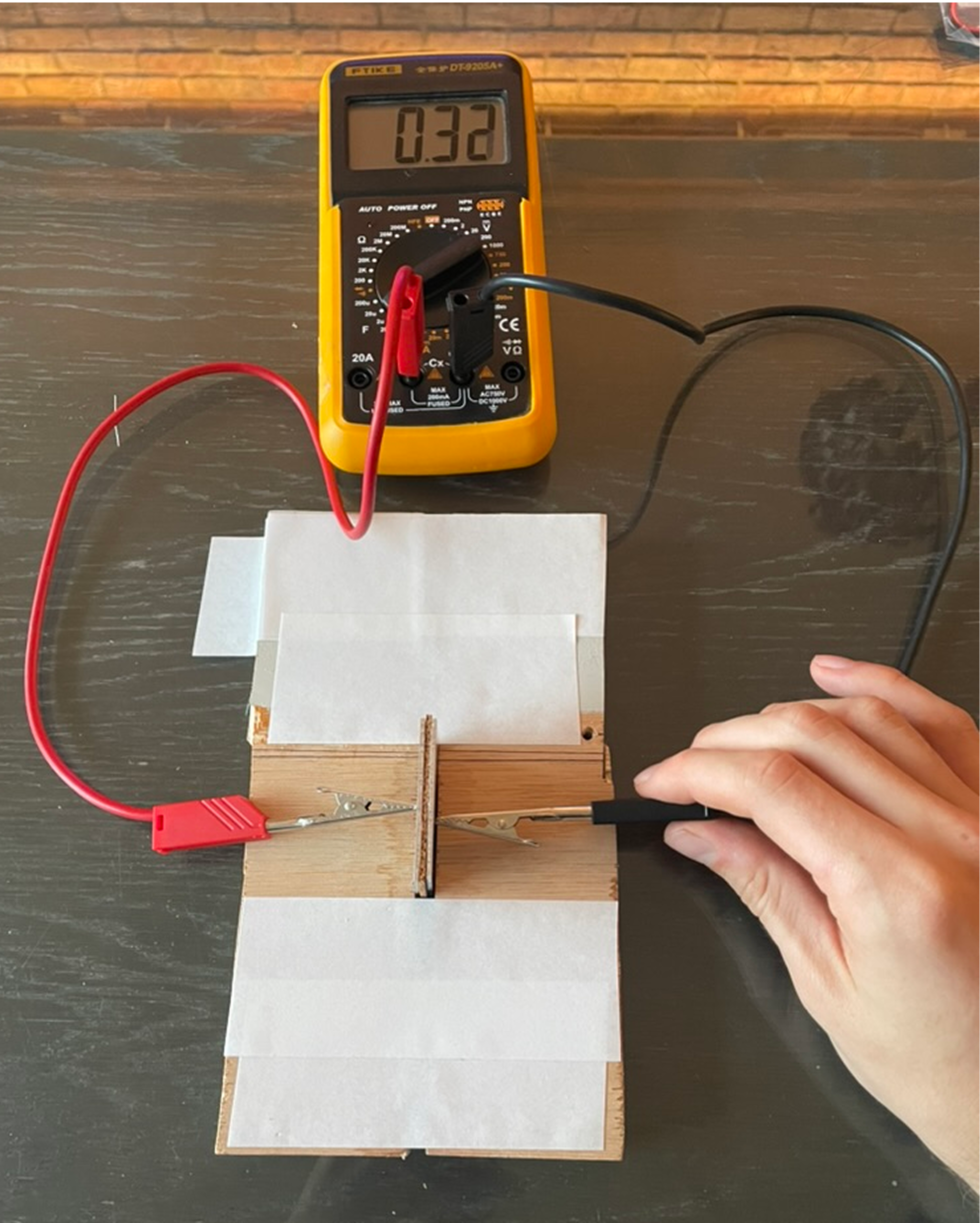
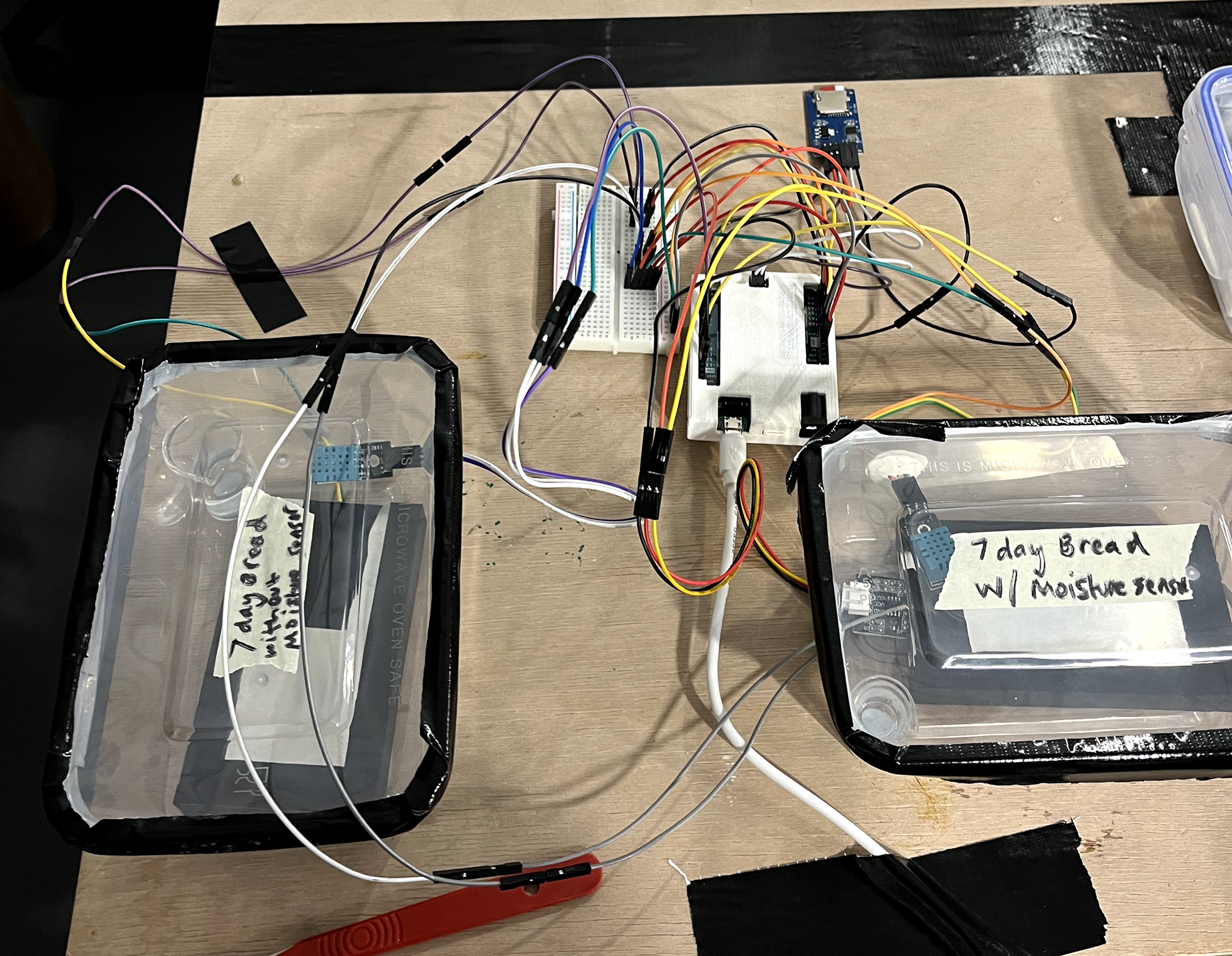
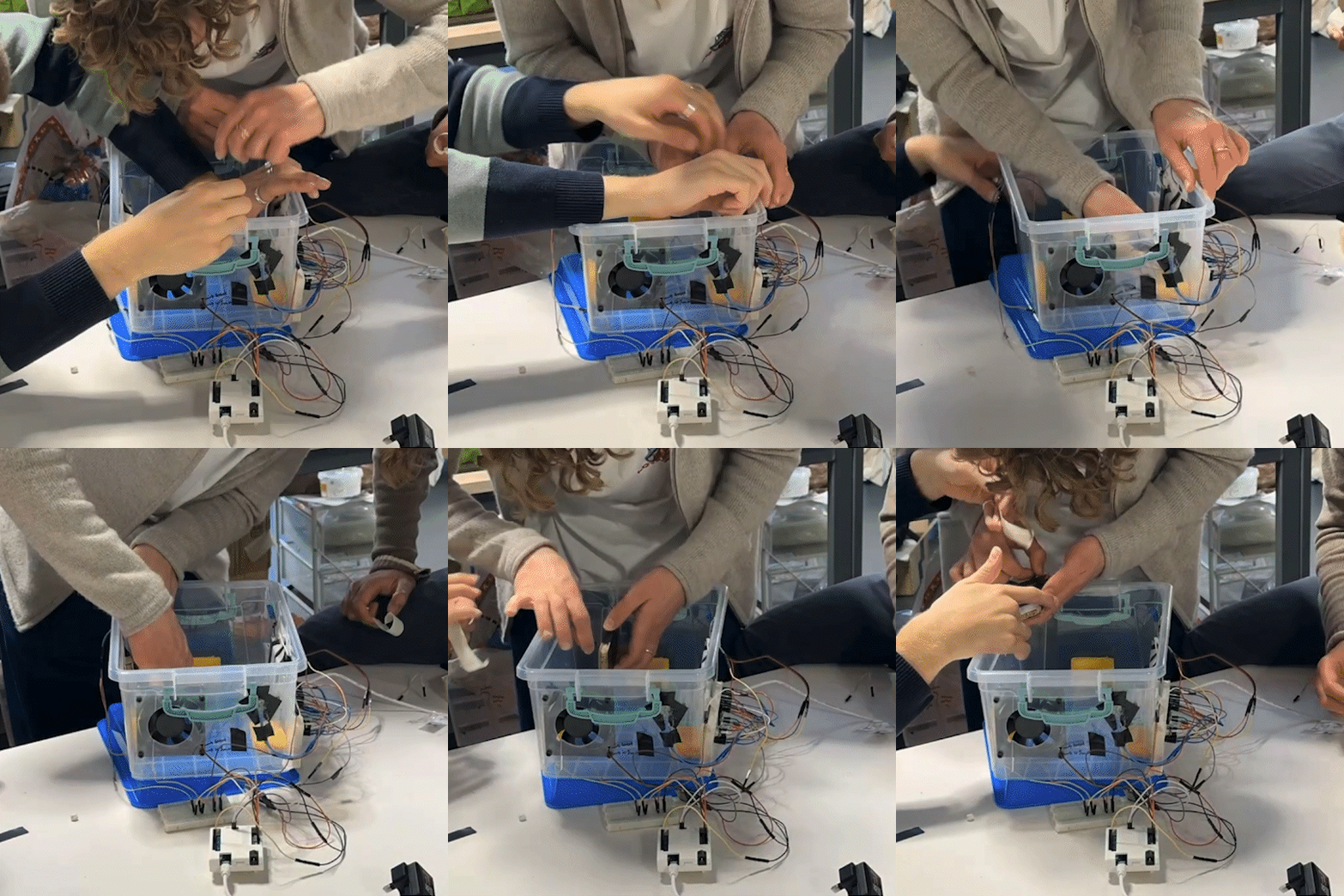
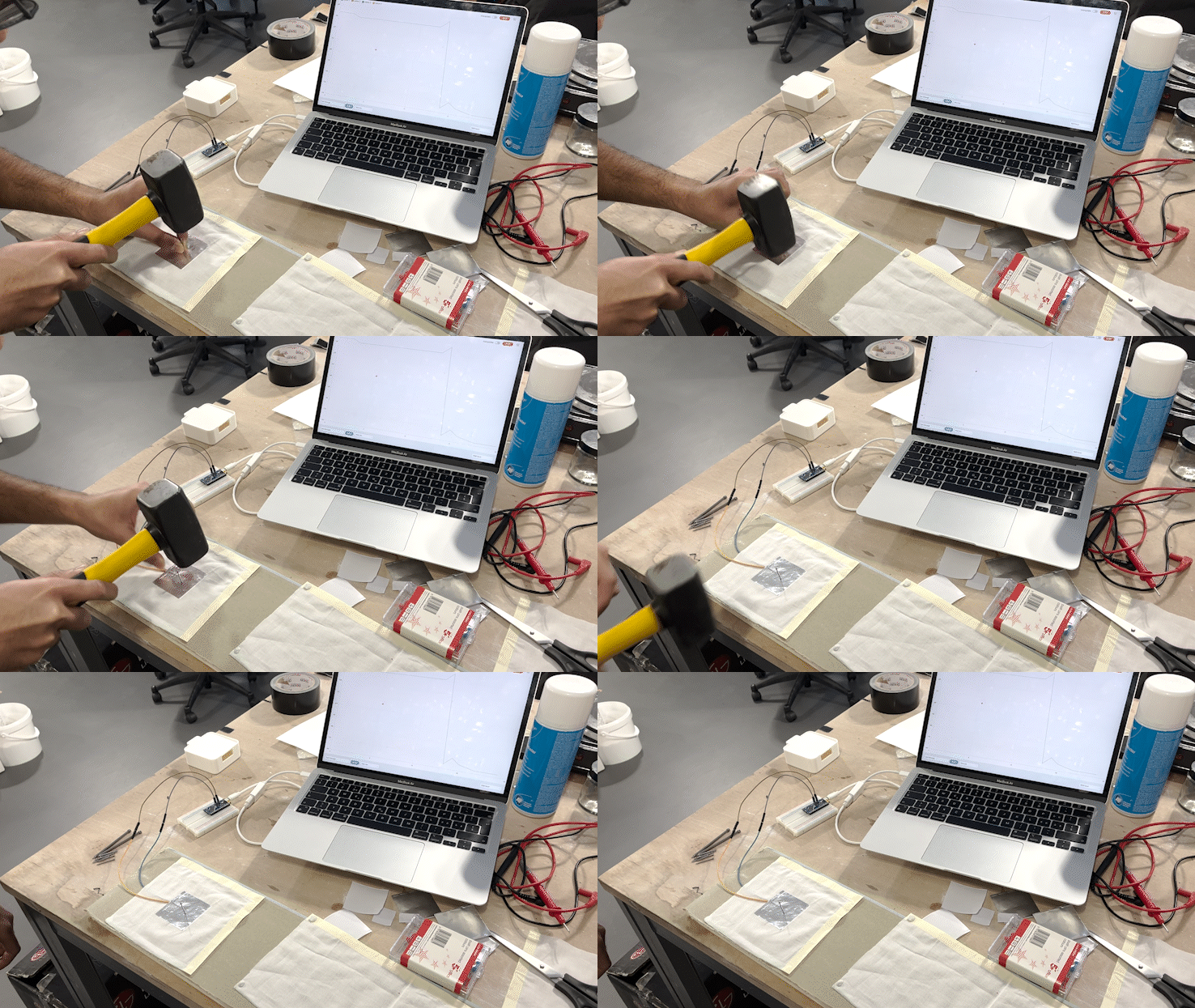
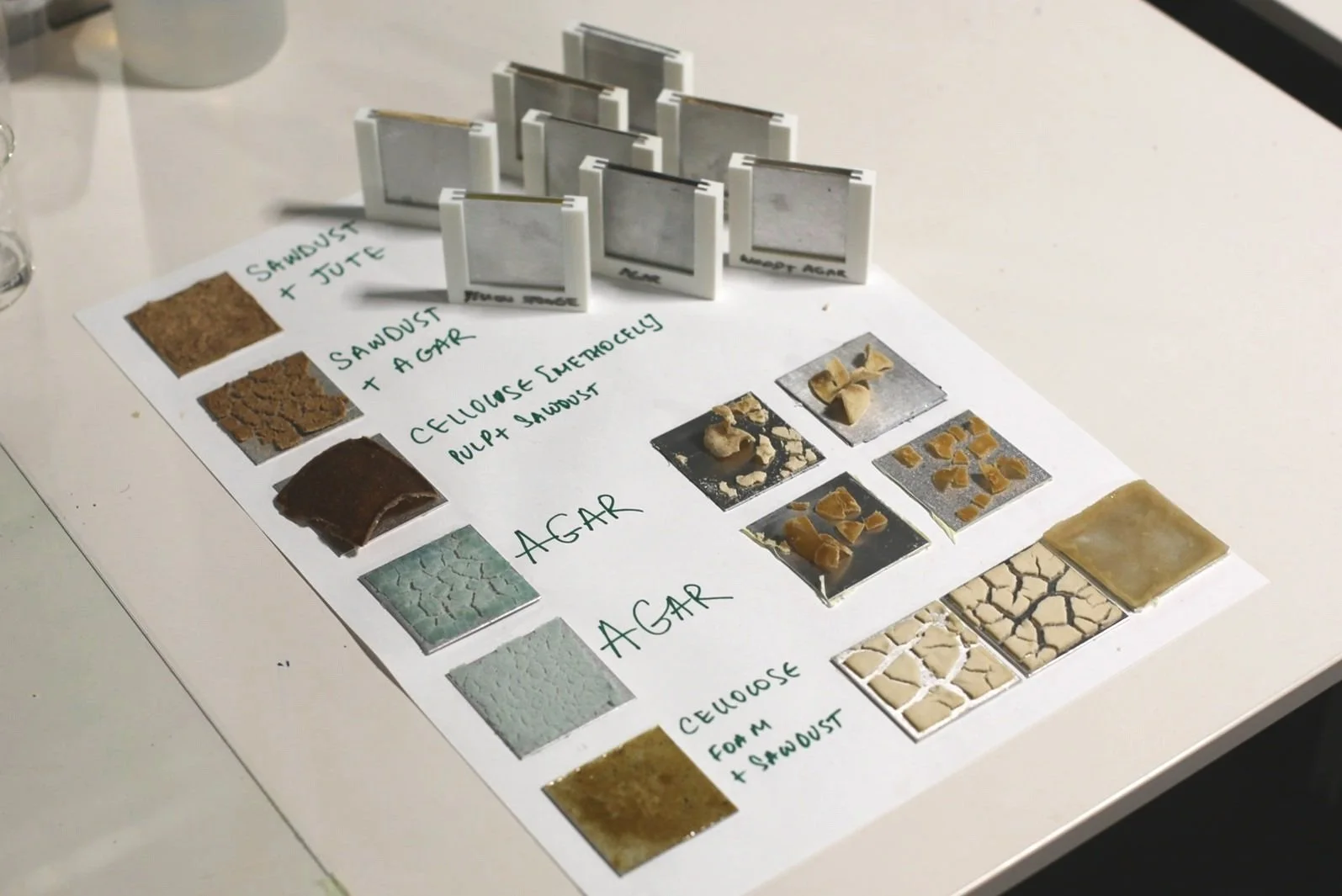
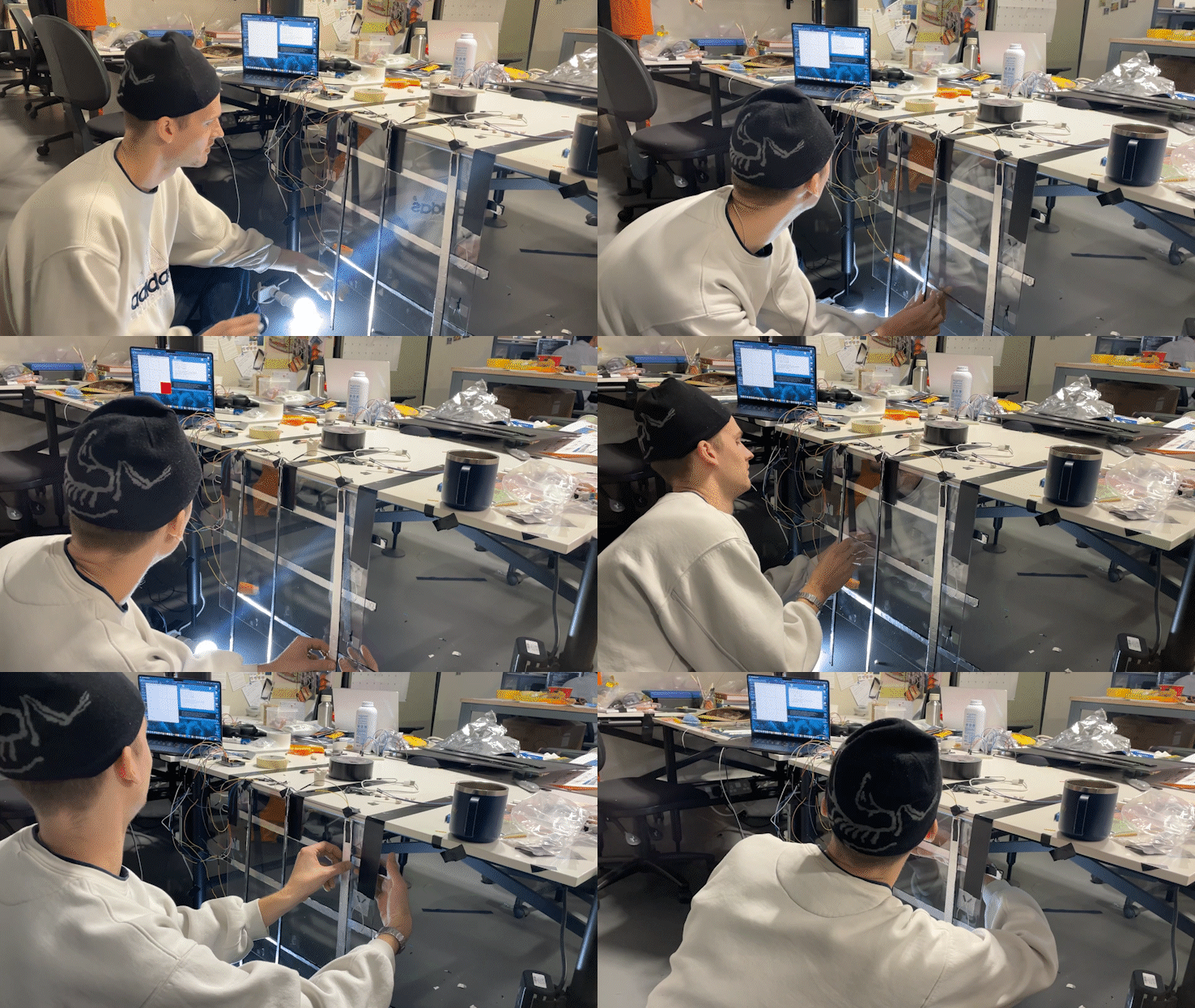
We began prototyping a sensor which could be easily retrofitted in homes, detecting mould growth before it became a health hazard. Our design uses a grid of capacitors on an adhesive sheet, which, unlike other sensors on the market, directly detects mould growth, by monitoring capacitance changes over time. The grid design provides another innovation: the ability to spatially pinpoint mould, which can dramatically speed up the removal process. To create an effective sensor, we prototyped by growing mould on various materials in a temperature and humidity-controlled environment, and regularly logging capacitance values with two conductive plates and an Arduino.
The central challenge for our sensor was to differentiate mould growth from the natural capacitance changes caused by fluctuating humidity. We ran a one-week experiment, growing mould on bread at a consistently high humidity, and saw changes in capacitance which matched the phases of mould growth, from exponential growth, plateu, and then a decay as the mould ran out of nutrients. This process creates a unique capacitance ‘signature’ which can only be created by mould.
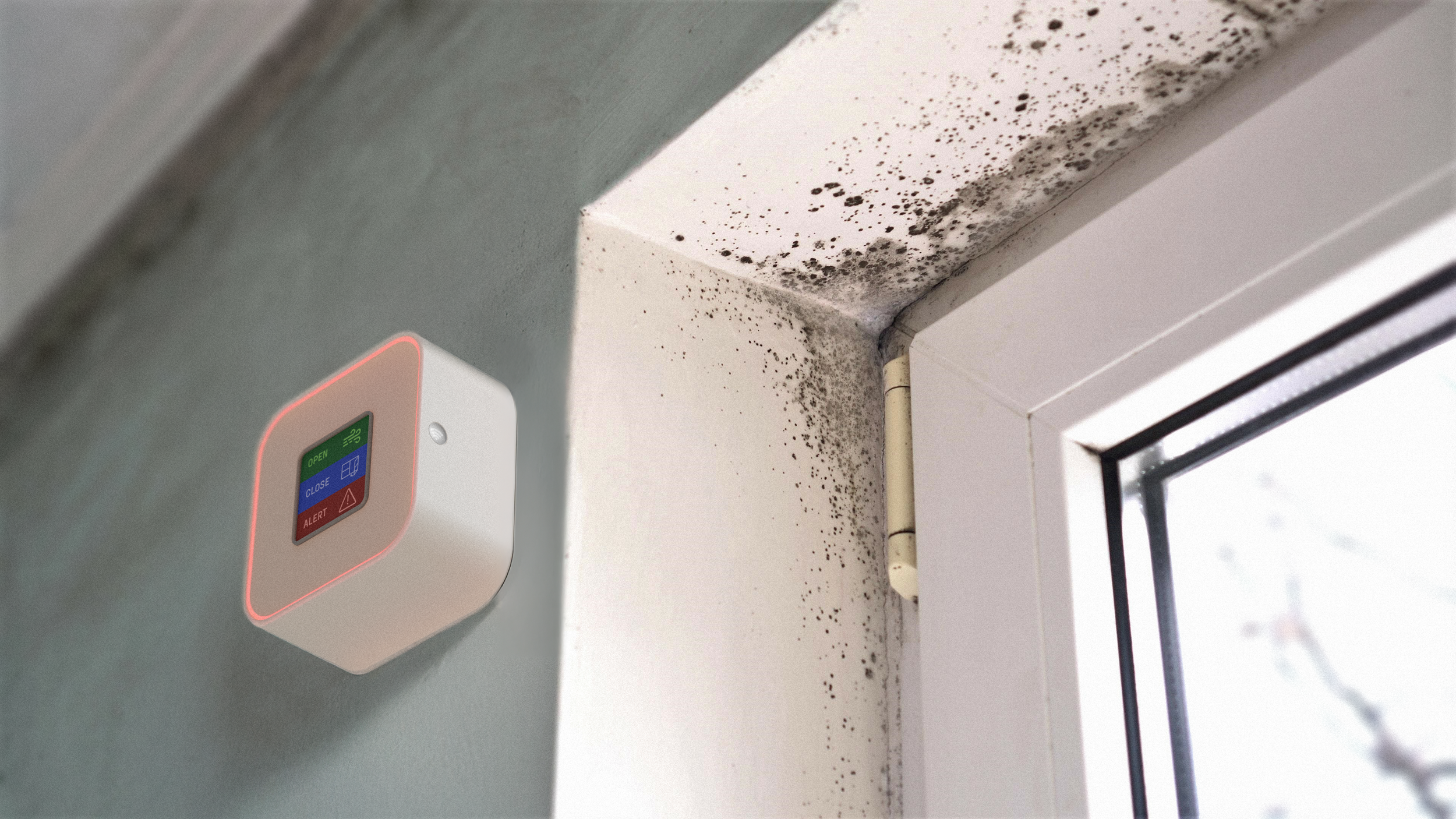
So how is the Modulo sensor used in a real home? First, during a renovation, it can be easily adhered to a specificed number of walls, just like wallpaper. The Modulo Box, which fits discreetly on a skirting board, powers the sensor with batteries, and sends raw capacitance readings to the cloud every 30 minutes. A specially specially designed user interface, called the Interaction Cube, turns red if mould is detected, and blue to motivate the tenant to improve ventilation. Finally, for landlords, we created a web app for viewing the real time status of their properties remotely.