X-River
A VR experience which engages communities in riverfly monitoring to protect British rivers
What:
VR Training, Interaction Design and Citizen Science
Who:
Imperial College London and Royal College of Art
When:
2024
Context:
Urban water bodies are often neglected, resulting in polluted streams, disconnected communities, and limited opportunities for citizens to effectively monitor water quality and biodiversity.
Outcome:
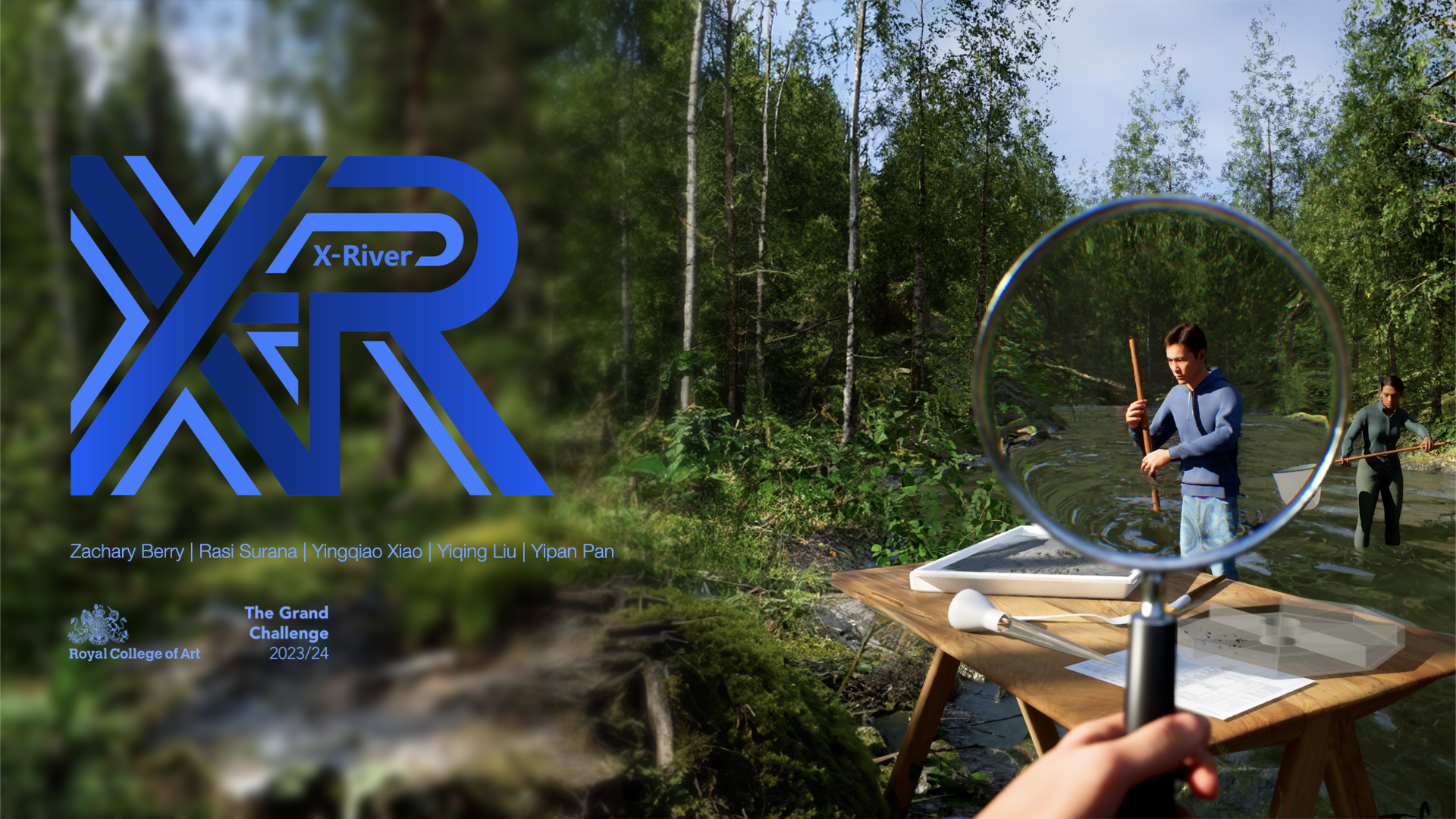
X-River is a VR experience which trains volunteers in riverfly monitoring, a technique for recording invertebrate numbers in rivers to monitor pollution levels. Using VR as a training tool makes riverfly monitoring accessible to a broader audience, including school children. Consequently, X-River has the potential to enhance the accuracy of pollution data in London’s rivers and promote infrastructural change at a policy level.
My Role:
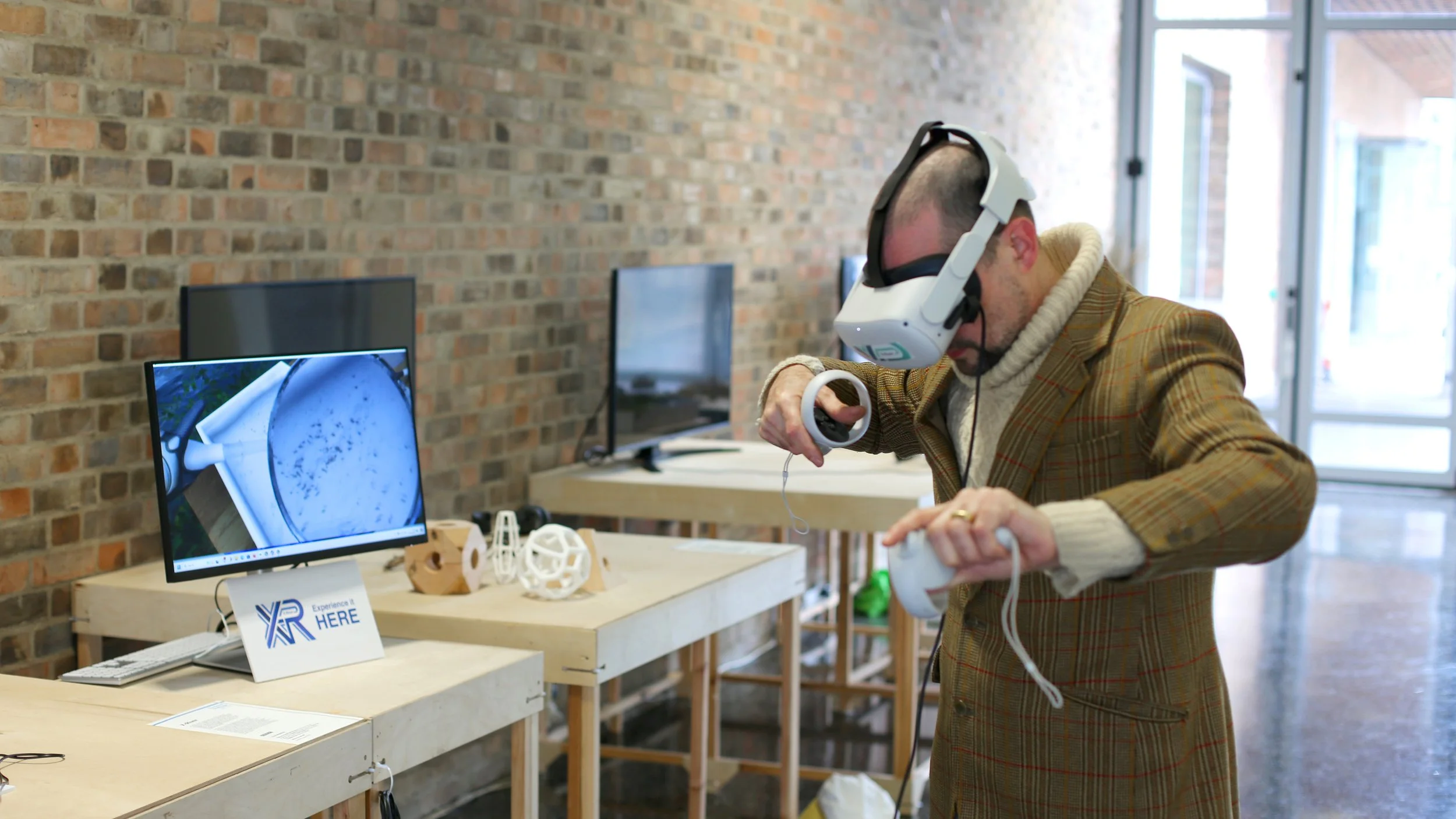
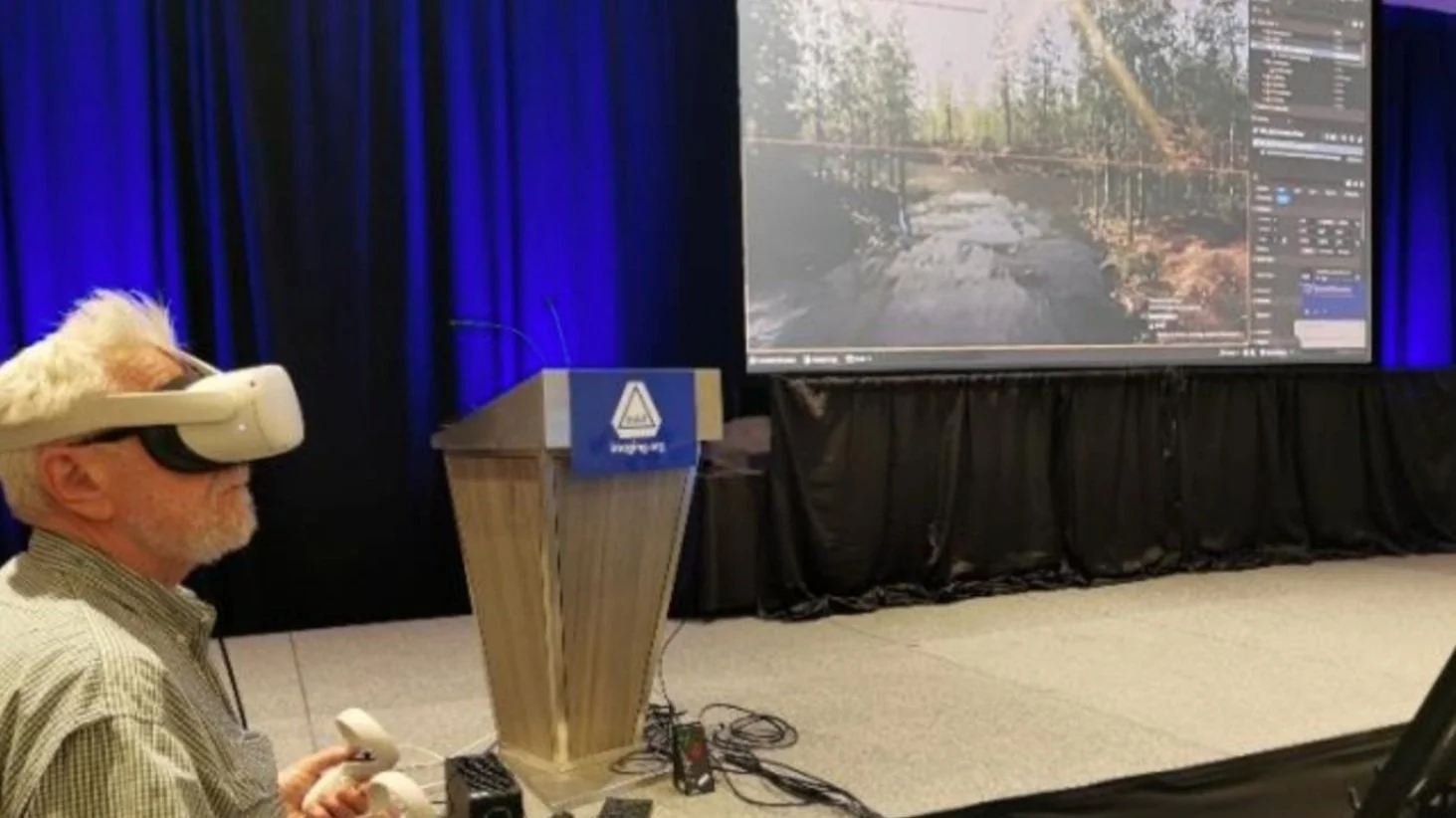
I used Unreal Engine and Blender to build a photorealistic virtual river environment and build the 3D models, animations, and rigs in the scene. I collaborated with Zoological Society London to ensure the training experience was realistic. I also created several functional tools using C++, such as a working magnifying glass and pipette, which were showcased during a live demo at the IS&T Symposium.
Awards and Press:
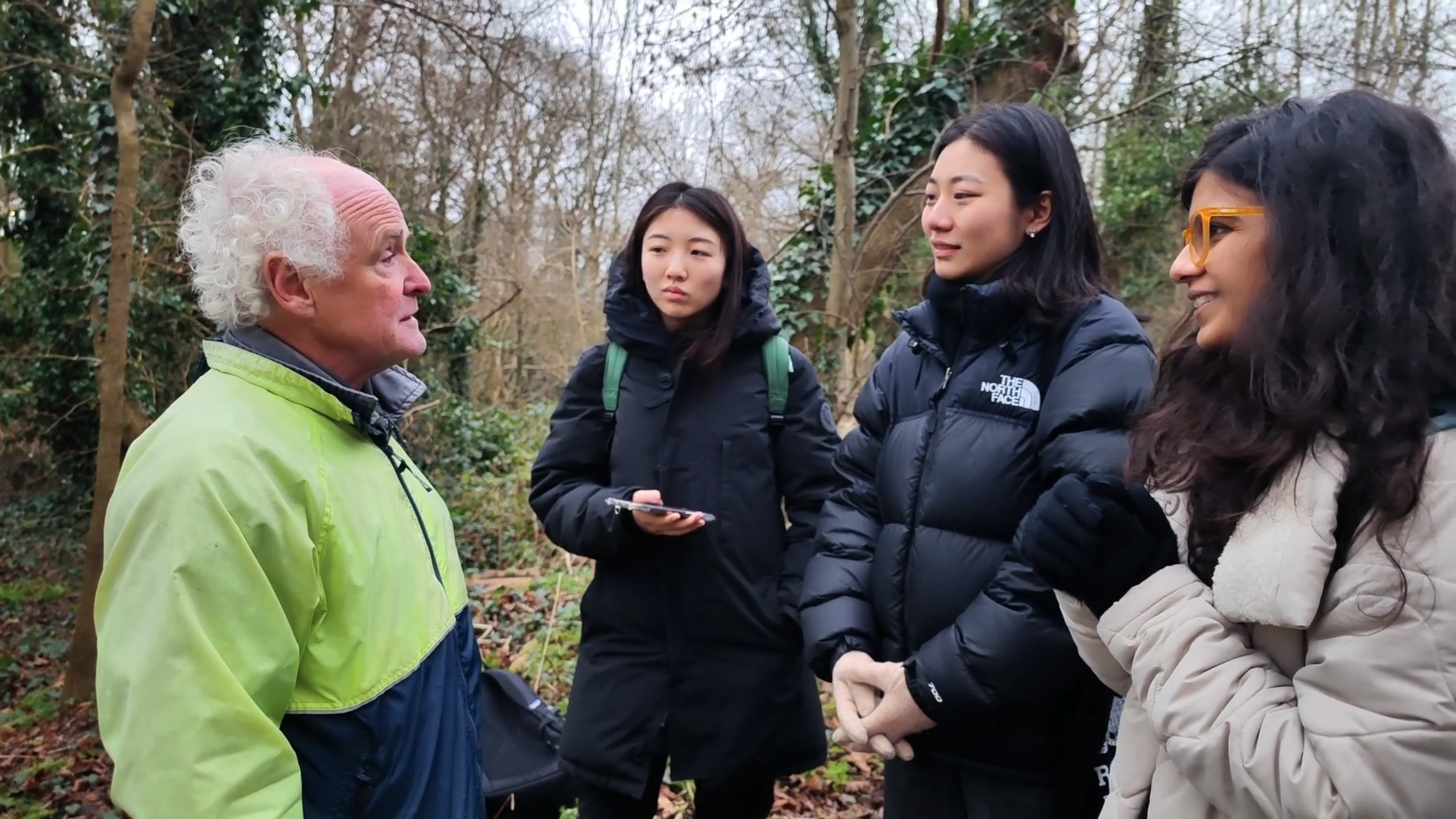
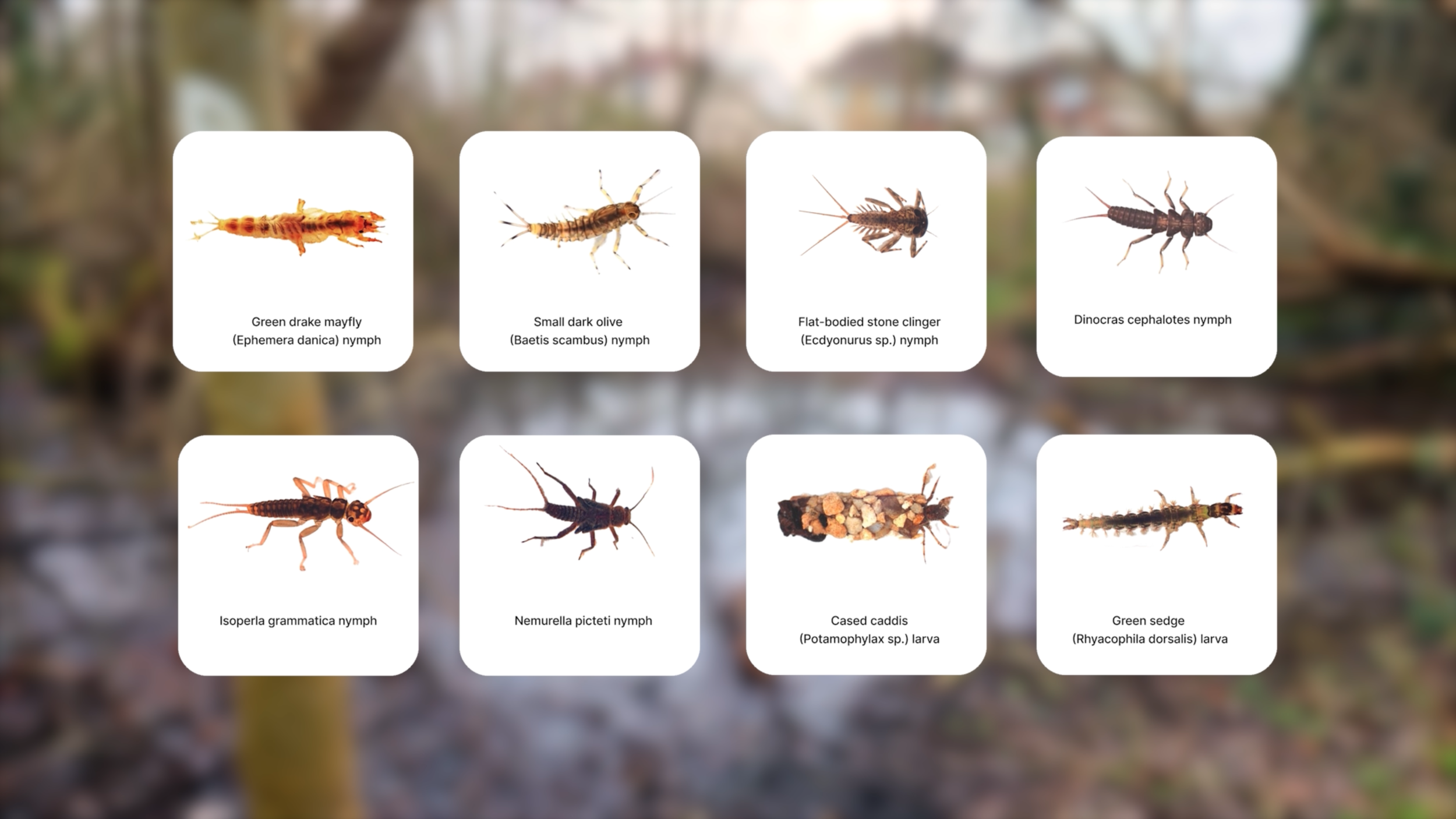
After speaking with riverfly monitors in Harrow, we learned that counting invertebrate species provides a reliable, low-cost snapshot of water quality and pollution. However, riverfly monitoring isn’t practised regularly due to limited staff capacity for training and low public awareness.
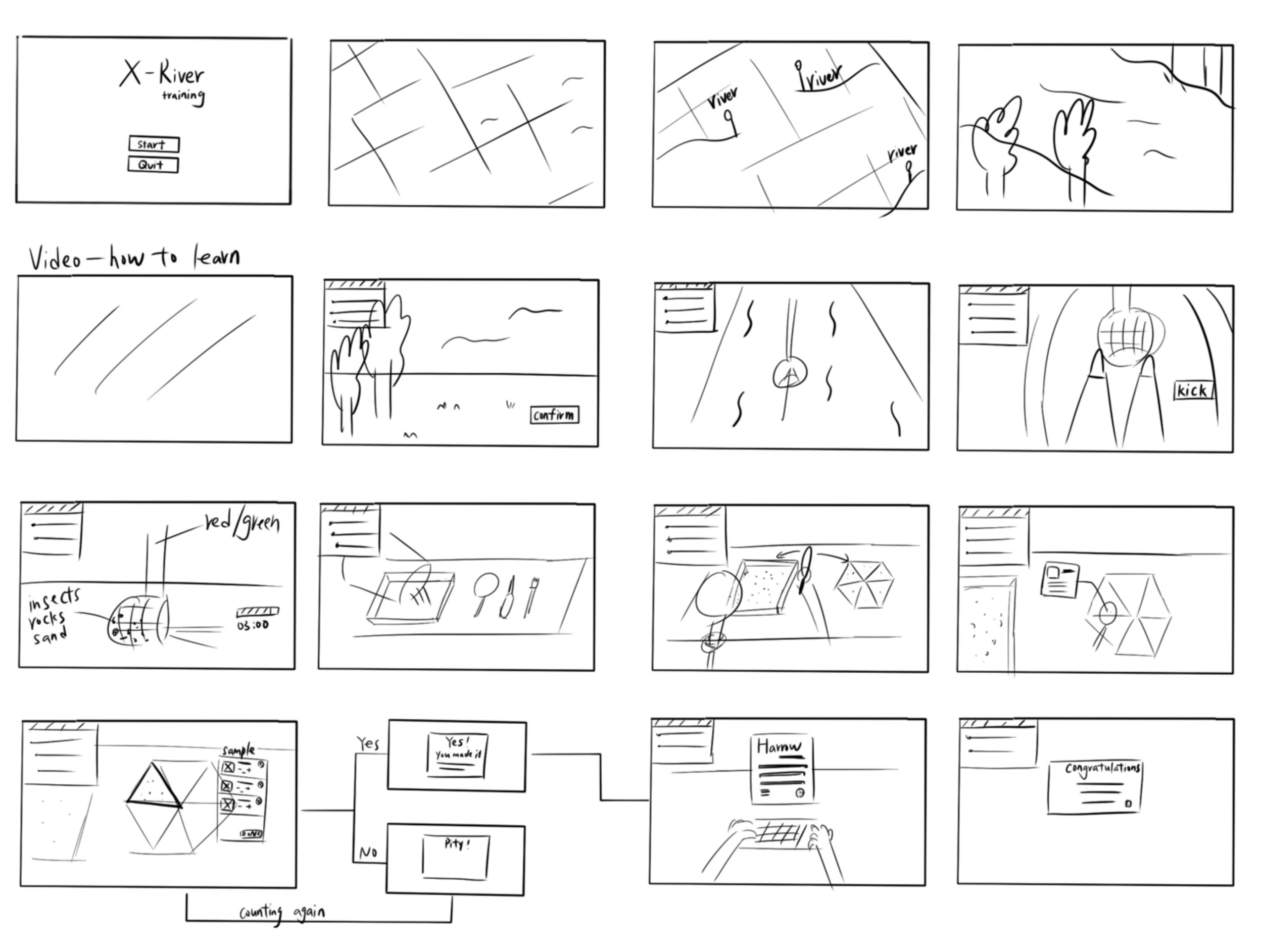
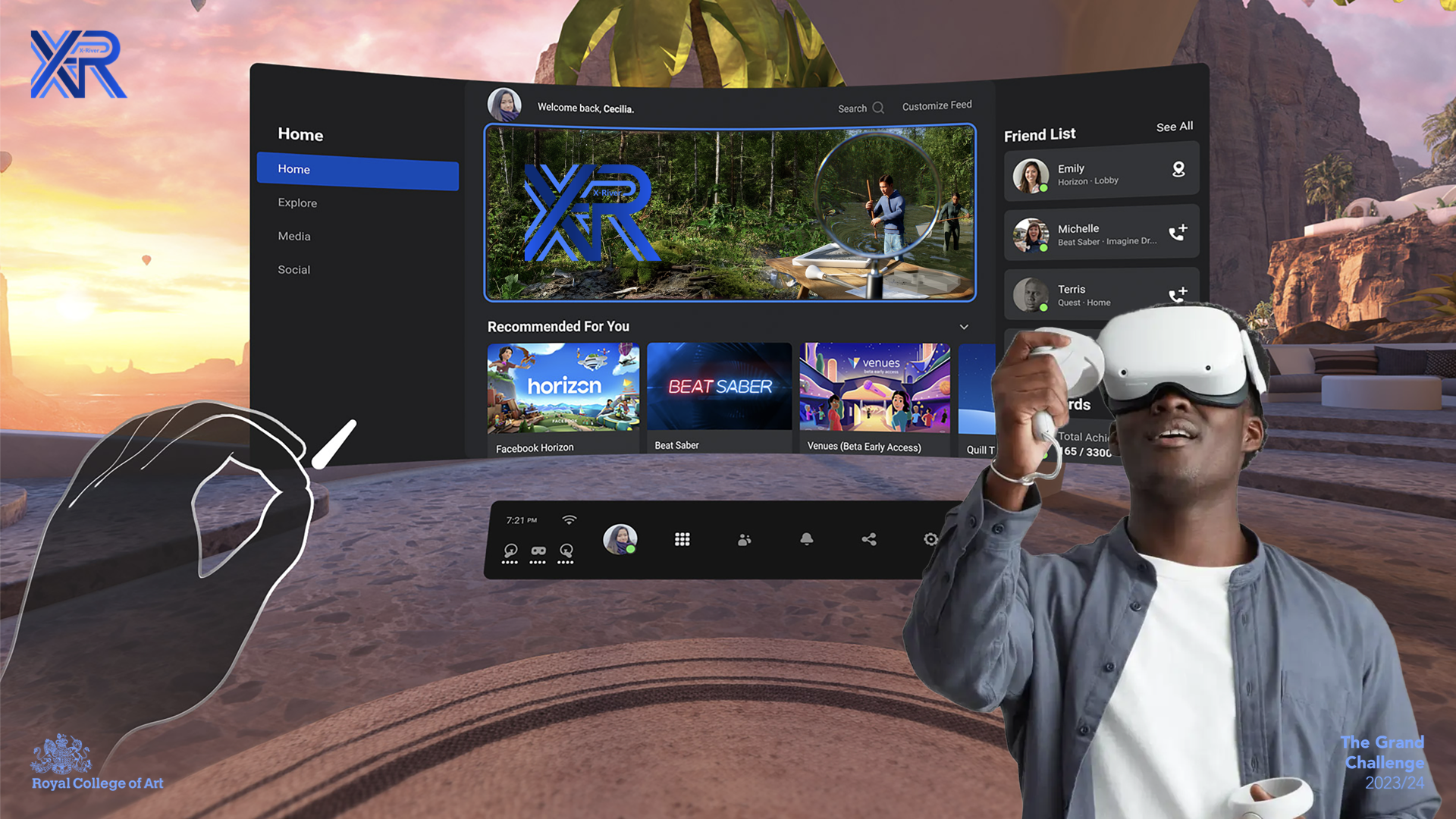
In response, we designed an XR-based riverfly monitoring training software for Oculus Quest 2. In collaboration with Zoological Society London and Harrow Nature Conservation Forum, we built an immersive, scalable solution which accurately simulates real-world sampling techniques, allowing more volunteers to become certified without stretching existing resources.
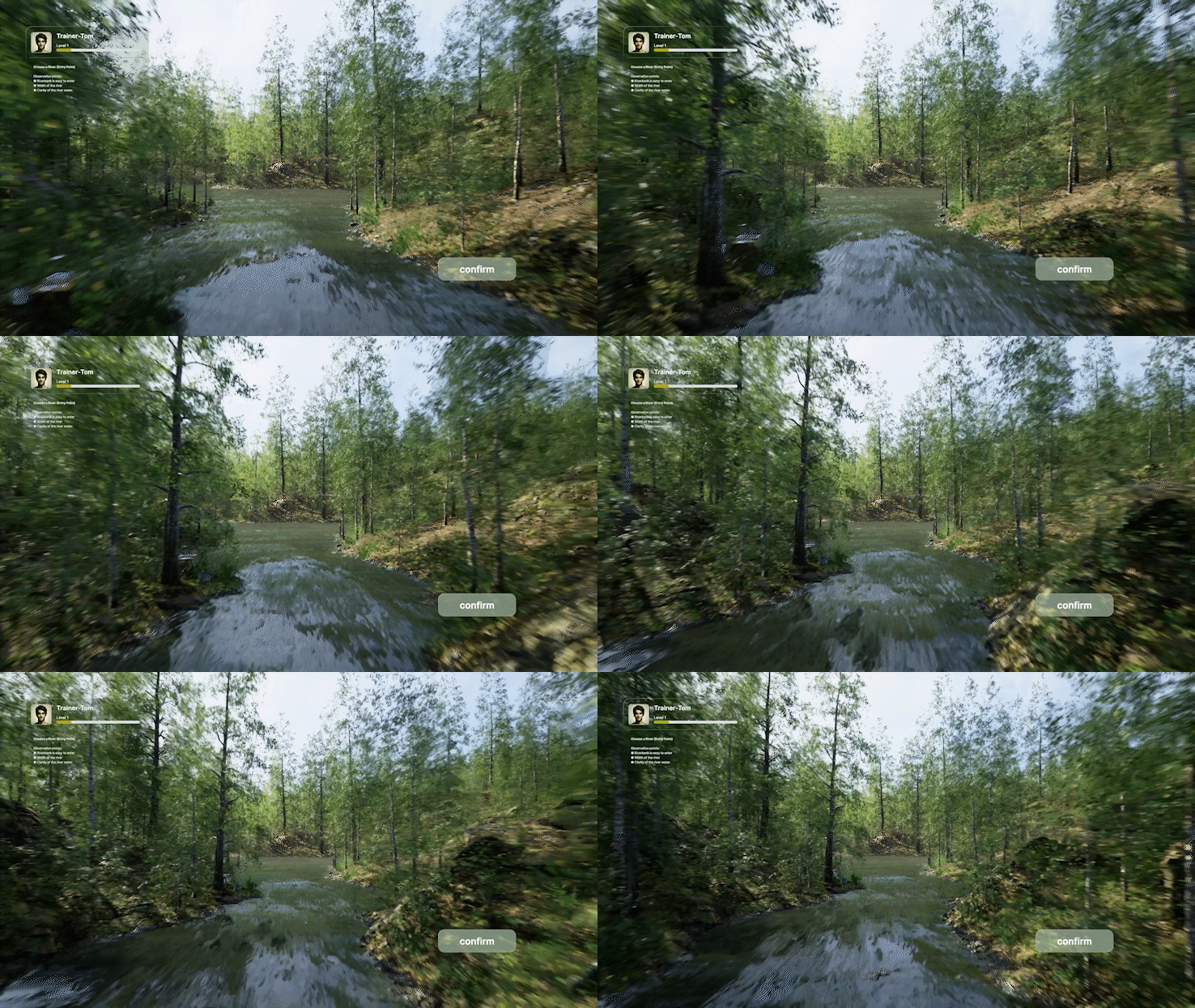
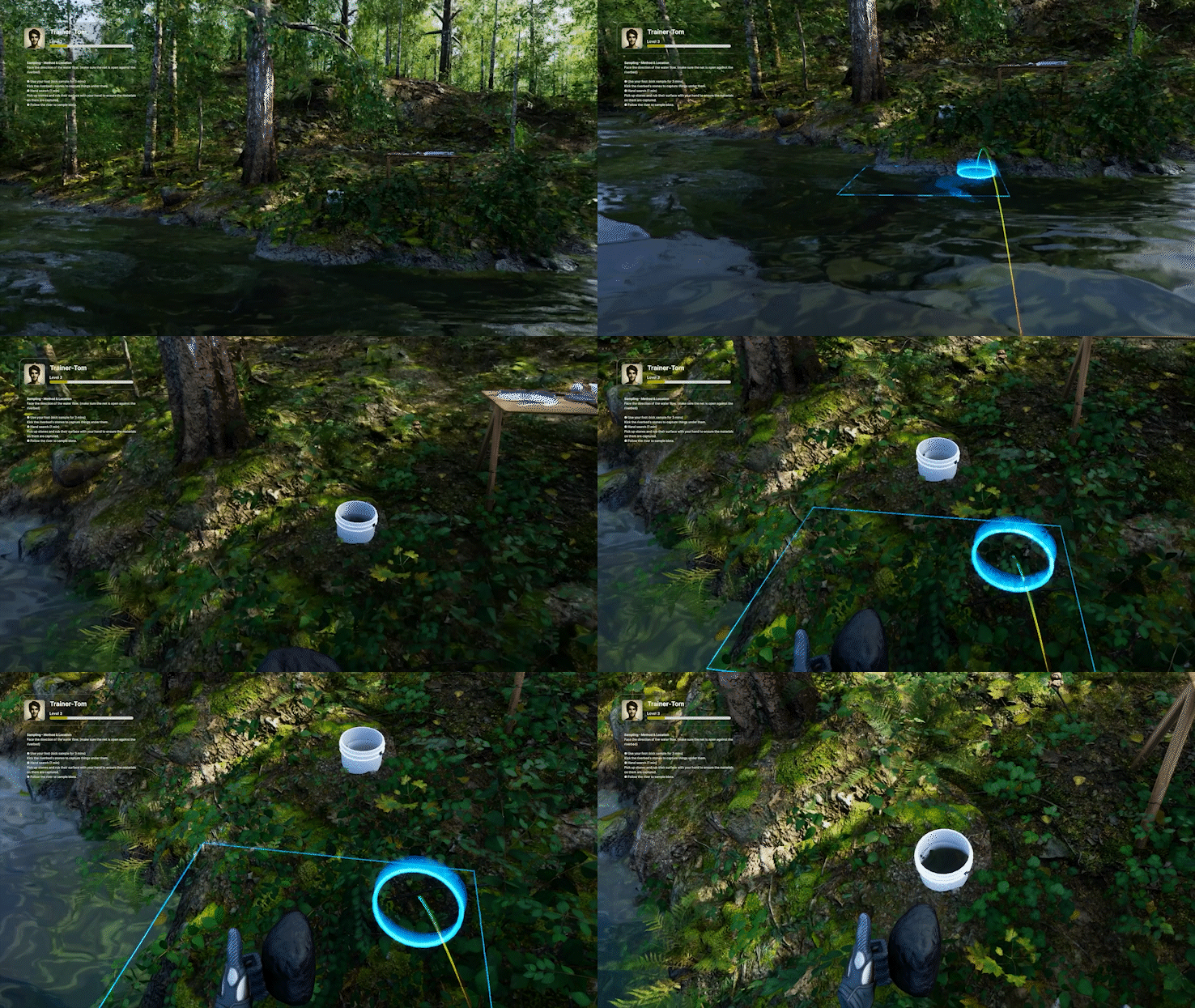
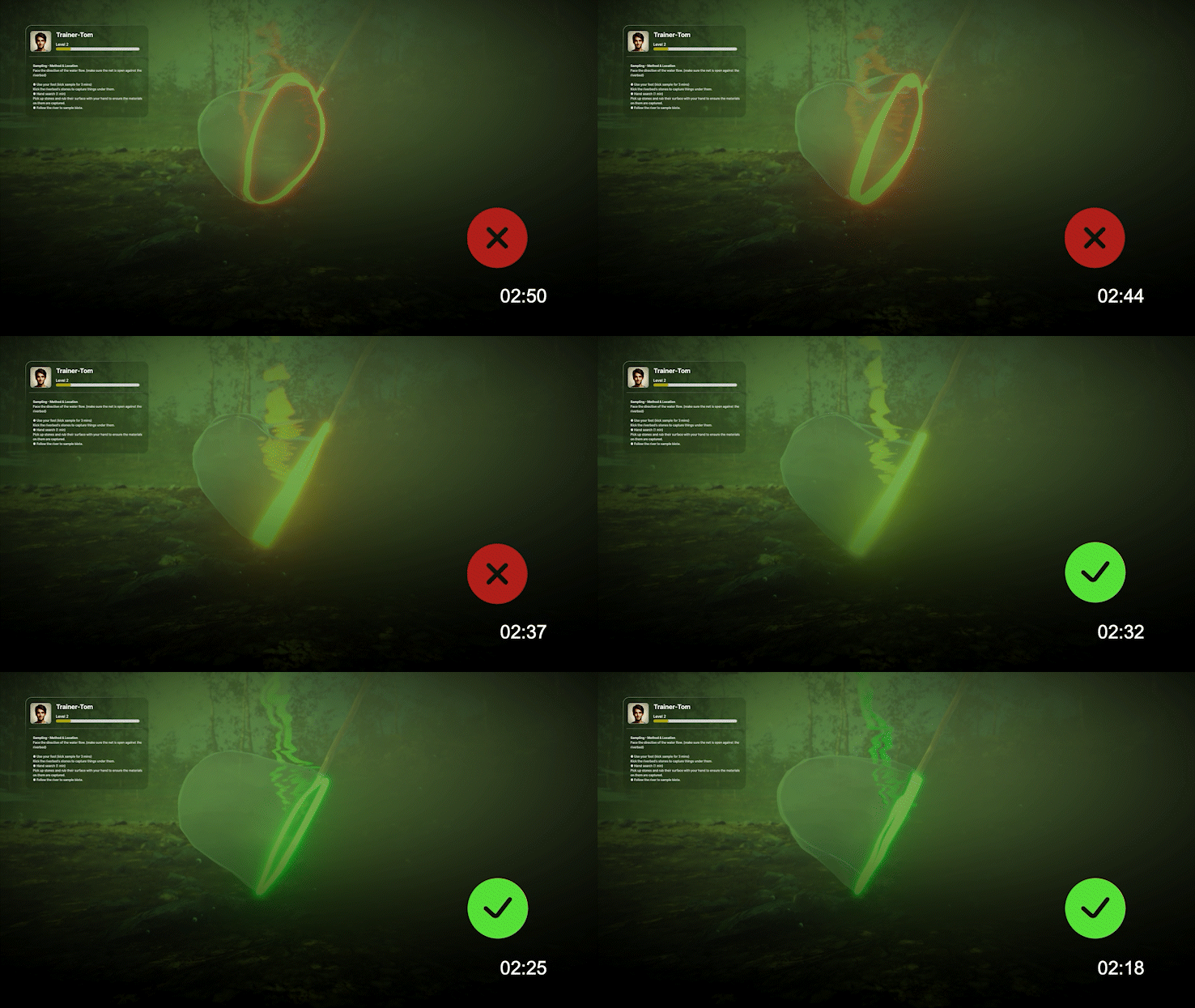
Using Unreal Engine for VR development, I built a realistic river bank environment, with an easy to use navigation system. I also created a dynamic material which changes colour to indicate the correct net placement underwater (right).
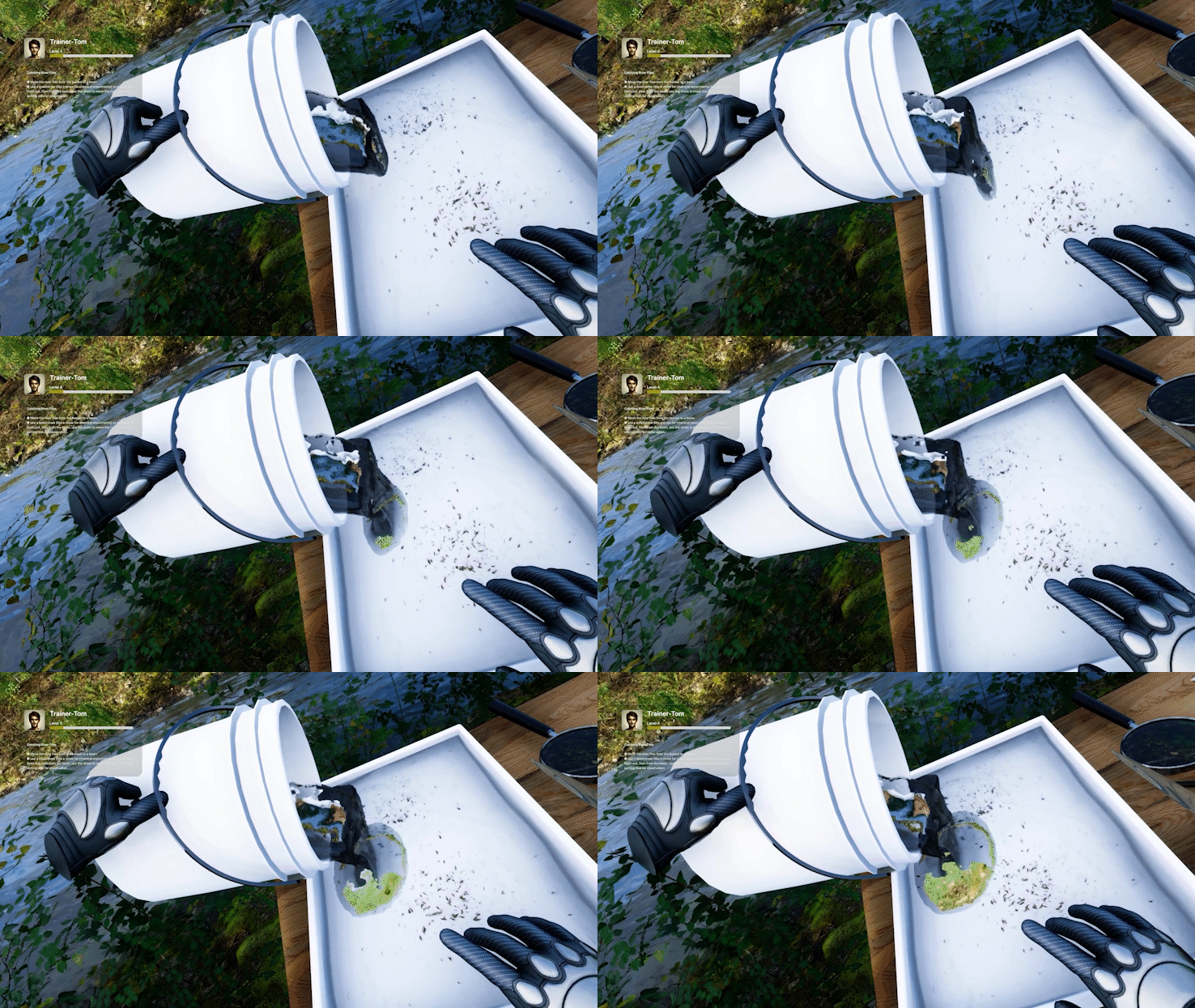
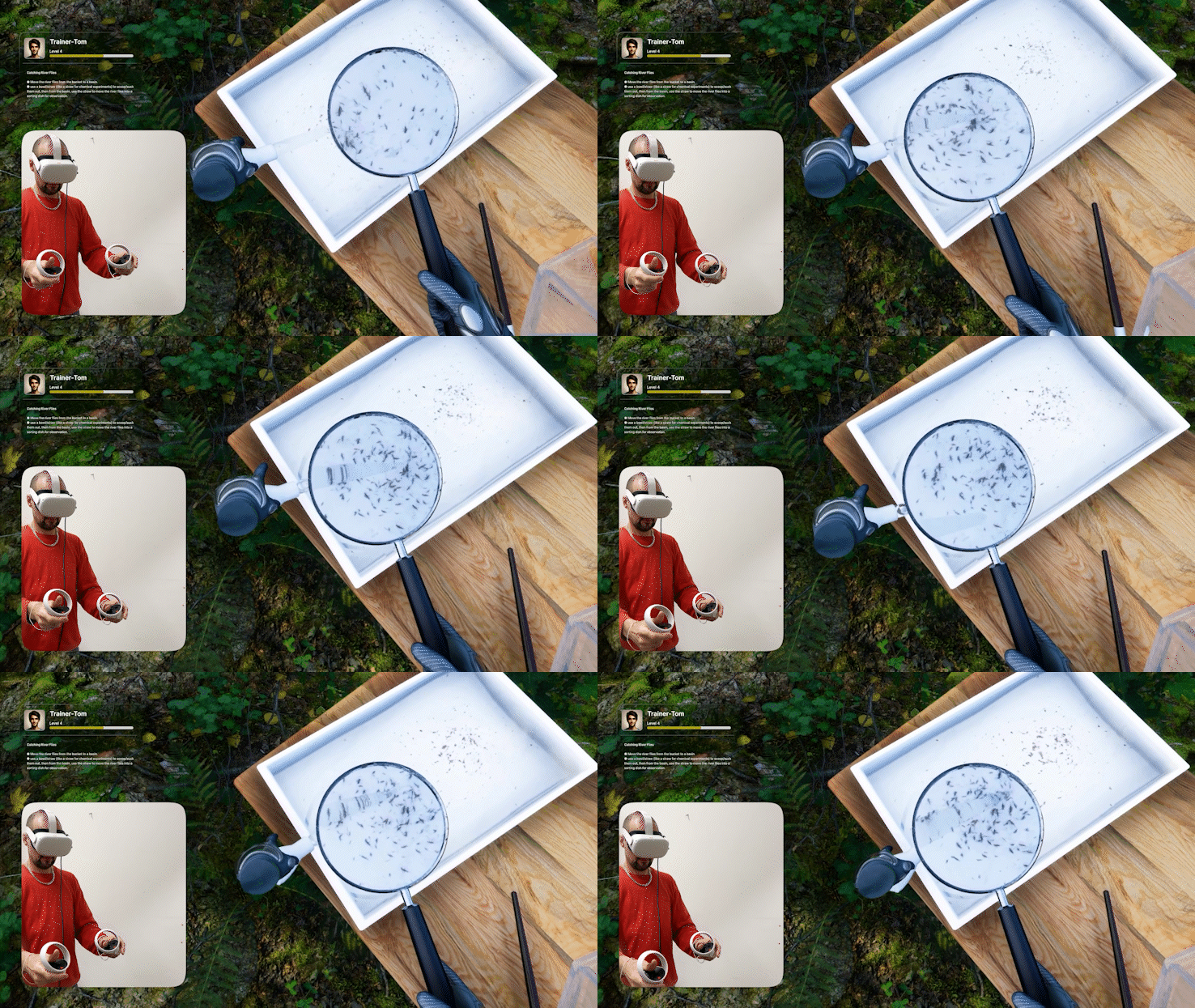
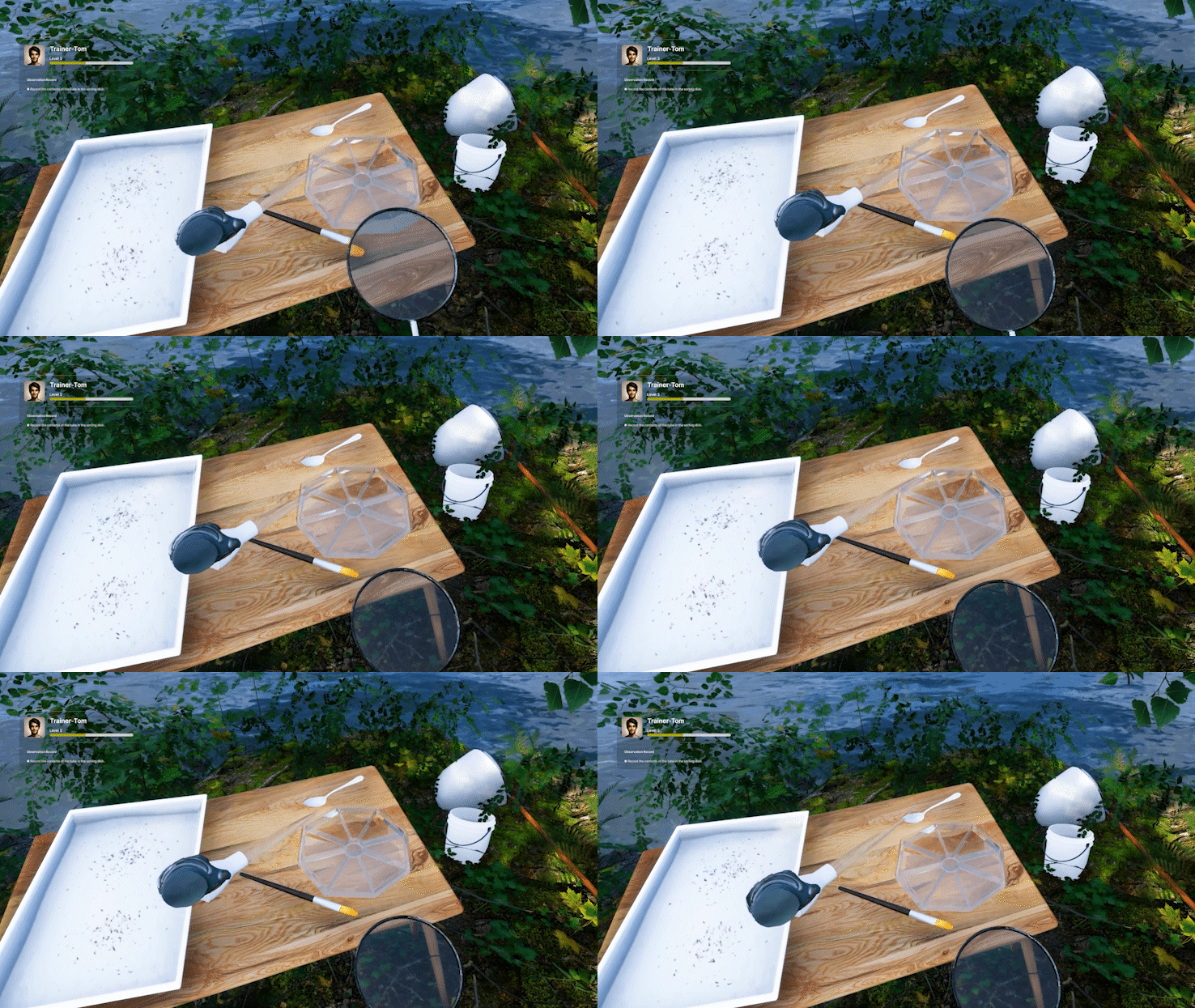
For realism, I used C++ to build a working VR magnifying glass, which can be used to inspect the riverfly’s close-up. Additionally, the virtual pipette can transfer the different species into a divider tray.